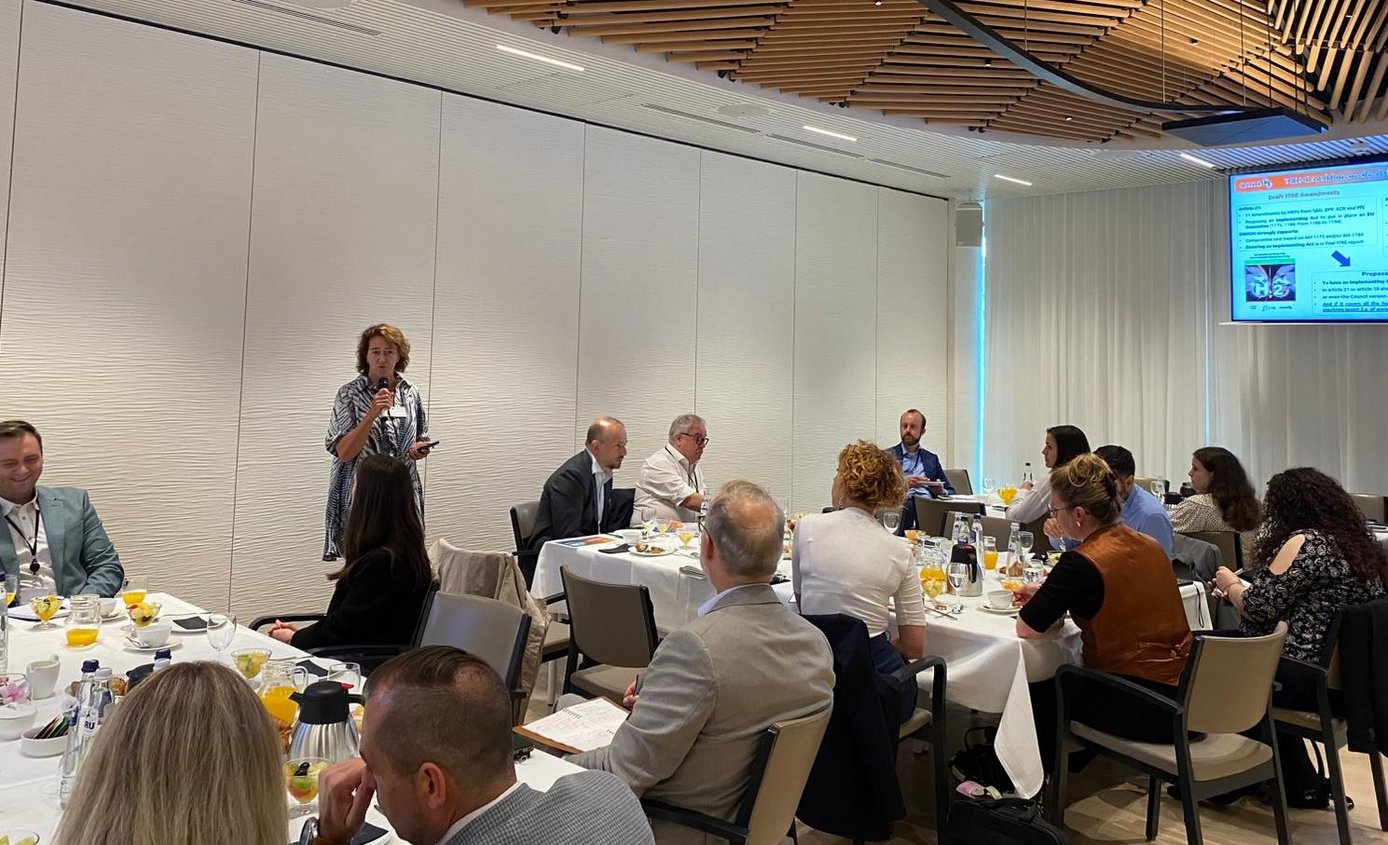
This morning, Ready4H2 project spoke at a Parliamentary Breakfast organised by ENNOH in their capacity as Chair of the European Clean Hydrogen Alliance (ECH2A) Roundtable on Transmission, Distribution and Storage. The event brought together stakeholders from the transmission and distribution sectors to discuss how to de-risk hydrogen infrastructure developments, prior to the supply of hydrogen. During the session participants exchanged views on amendments to the ITRE report on the revision of the TEN-E framework, ENNOH presented its de-risking report (showcased at the Copenhagen Forum), and the role and challenges facing gas distribution system operators (DSO).
A recurring theme throughout the discussion was the need for greater coordination among policymakers, infrastructure operators, producers and consumers. Speakers stressed that a coherent and coordinated approach is essential to accelerate market development and facilitate the scale-up of the European hydrogen economy. ENNOH specifically proposed an EU Guarantee to reduce financial risks, and to be a co-author of the Offshore Development Network Plan (ONDP), currently under the responsibility of ENTSO-e, with an impact on bringing green hydrogen onshore by pipeline.
Ready4H2 Director, Barbara Jinks, provided an overview from the perspective of gas distribution system operators (DSO). She shared the key benefits that gas DSOs bring and identified three areas where DSOs need support to achieve their aims of transforming their business to hydrogen:
