26. Juni 2026
The Evolution Wasserstoff (Evolution Hydrogen) high-level forum was held by DVGW in Berlin this week to celebrate the developments made over the past 100 years in Germany’ energy landscape and to discuss how to ramp up the newest change - a hydrogen economy. The history of the coal utilisation company that was formed in June 1926 and later became Ruhrgas AG, now a holding company only was covered, each decade with its specifics of large gas supply, network building, expansion, system modernisation, foreign trade and cooperation, liberalisation and, most recently, decarbonisation and hydrogen.
As CEO of DVGW, Dr Gerald Linke, stated: “A key takeaway from energy history is that it is never just about technology; it is always part of a country's social and economic resilience. Today, too, we are seeing once again how closely security of supply, competitiveness and political stability are interlinked. The roll-out of hydrogen is therefore not merely a matter for individual companies - it is a strategic issue for Germany as an industrial hub and for Europe.”
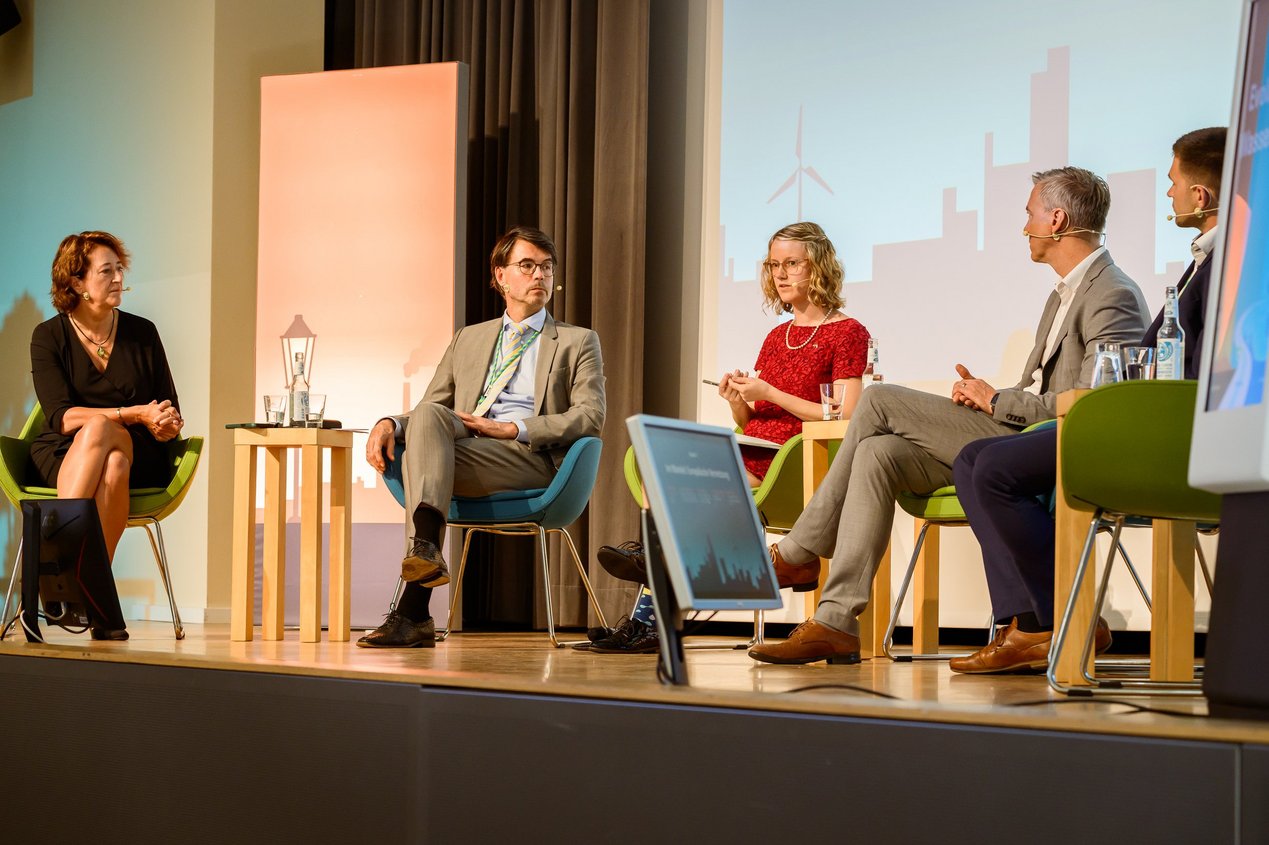
The discussions that followed looked at the ramp up of hydrogen from 5 perspectives: energy carrier, trade, infrastructure, market and European integration. Ready4H2 Director, Barbara Jinks, moderated the last session with panellists from IEA Dennis Hesseling, ENNOH Nils Melcher, ex German Minstry of Economics and Climate Philipp Steinberg and the Dutch embassy representative in Germany Viktoria Schuck. Issues discussed included the change in energy supply and demand from decarbonisation to energy security, the importance of international relationships and project development (such as the Rhein Delta), the changing role of the gas infrastructure from reliable gas supplier to a broader range of storage, grid balancing, flexibility and cost reduction.
